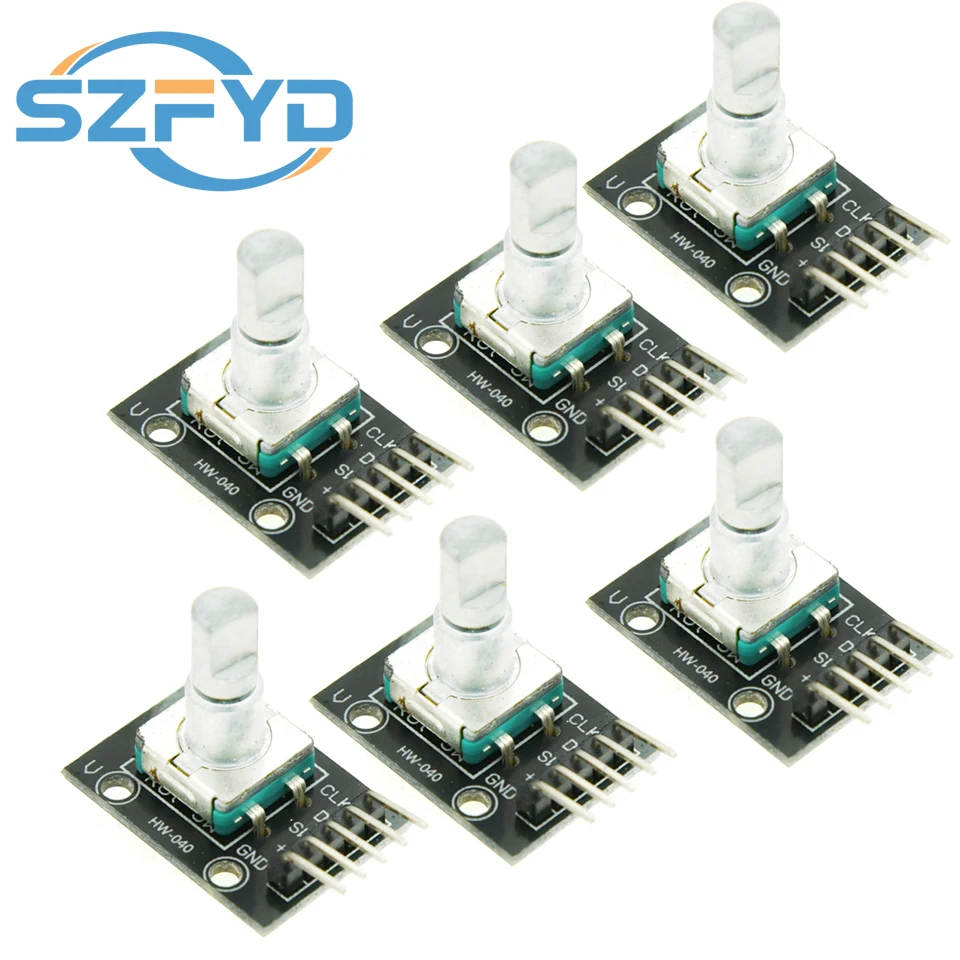
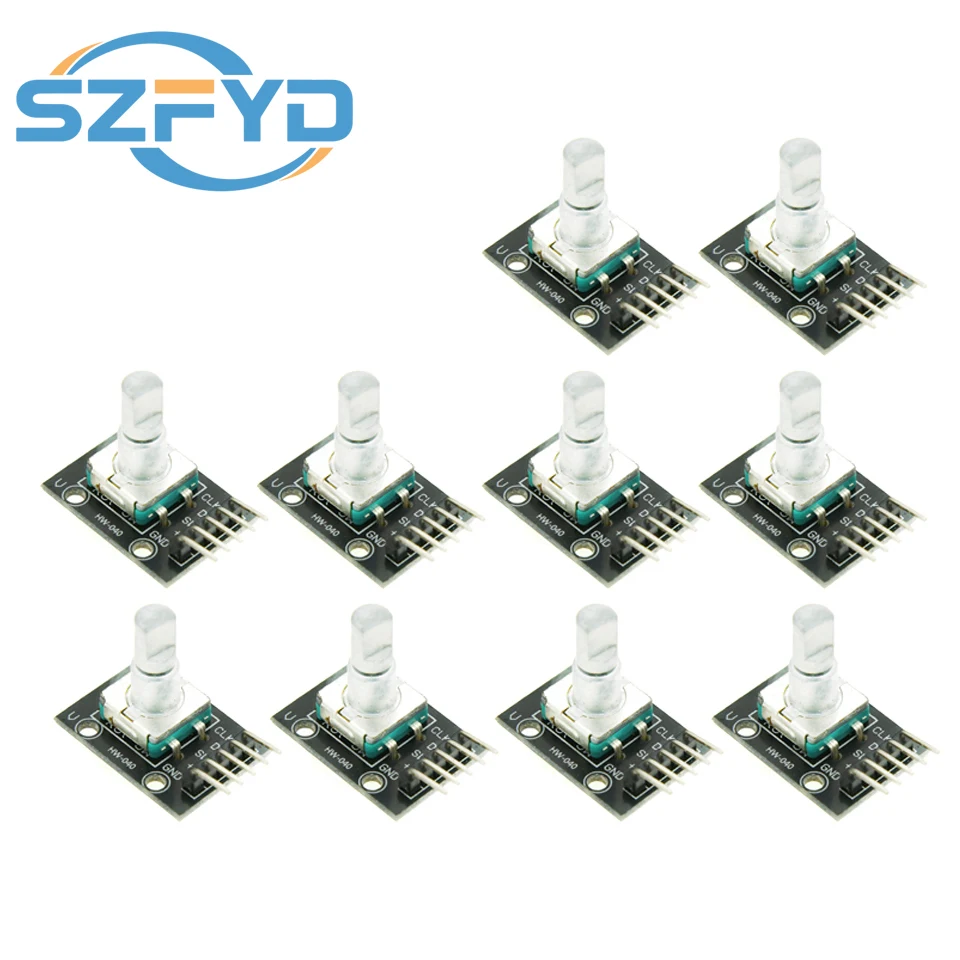
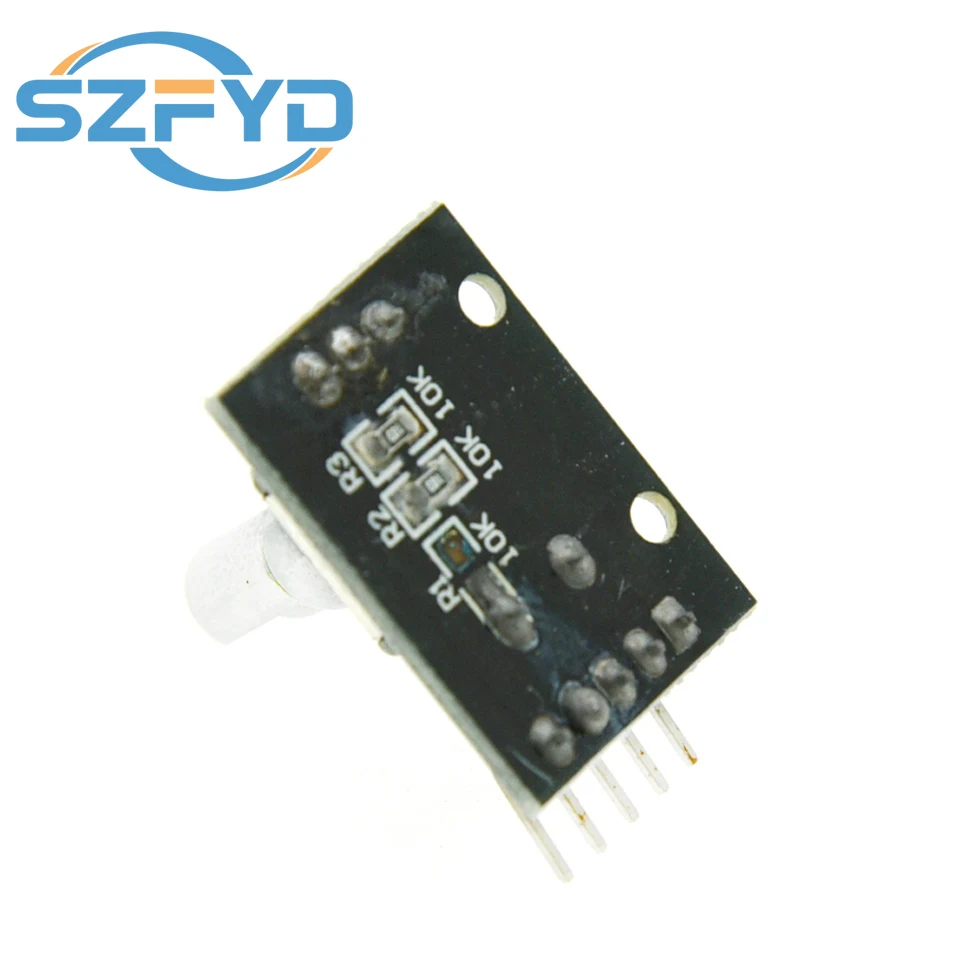
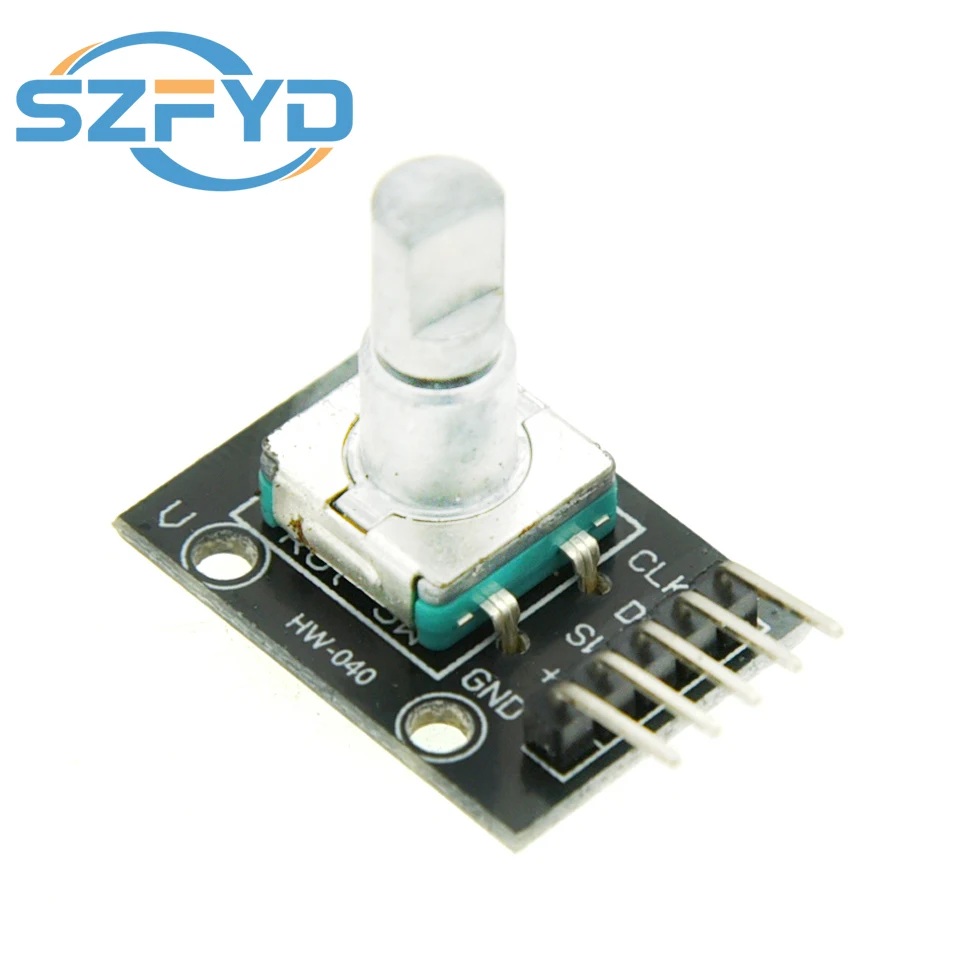
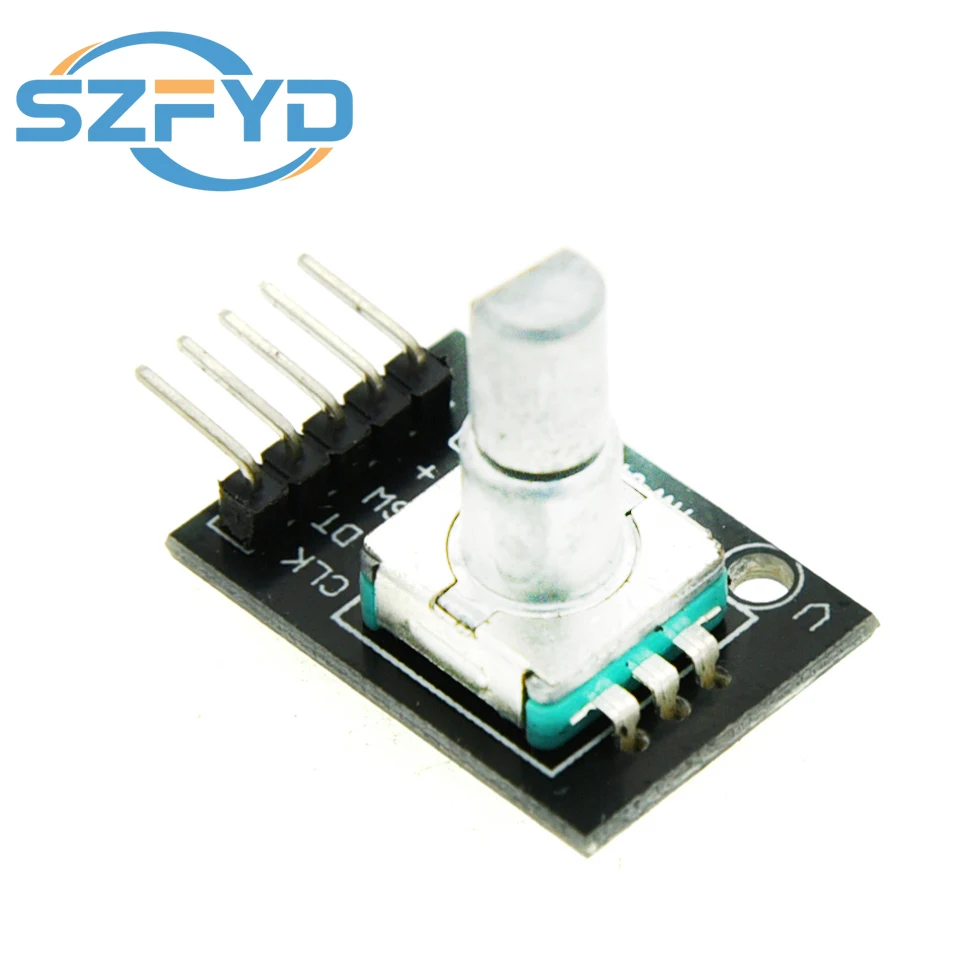
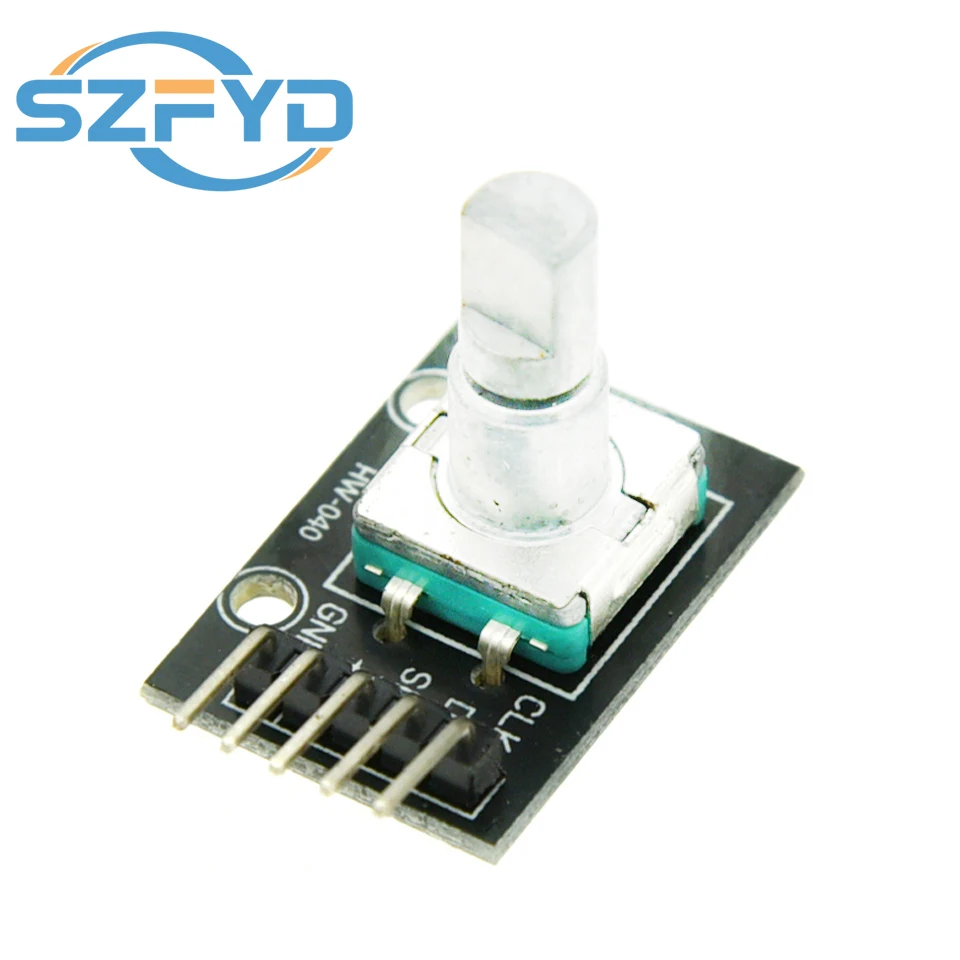
1–10 Stück 360-Grad-Drehgebermodul KY-040 Ziegelstein-Sensor-Entwicklungsplatine mit Knopfkappe Potentiometer-KIT DIY für Arduino
Operating voltage: 5V Pulse count in one turn: 20 The rotary encoder can count the number of output pulses in the forward direction and the reverse direction by rotation. Unlike the potentiometer, the rotation count is unlimited. With the key on the rotary encoder, it can be reset to the initial state, that is, counting from 0. Working principle: Incremental encoder is a rotary sensor that converts rotating displacement into a series of digital pulse signals. These pulses are used to control angular displacement. The angular displacement conversion in Eltra encoder is based on photoelectric scanning principle. The READING SYSTEM IS BASED ON THE ROTATION OF A RADIAL DIAL (CODE DIAL) CONSISTING OF ALTERNATING LIGHT AND OPAQUE Windows, SIMULTANEOUSLY ILLUMINATED VERTICALLY BY AN INFRARED LIGHT SOURCE, WHICH PROJECTS THE IMAGE OF THE CODE DIAL ONTO THE RECEIVER SURFACE. The receiver is covered with a diffraction grating, which has the same window width as the code plate. The receiver's job is to sense the changes caused by the rotation of the disc and then convert the optical changes into corresponding electrical changes. The low level signal is then raised to the high level to produce a square pulse without any interference, which must be processed by electronic circuits. The readout system is usually differential, in which two different signals with the same waveform but a phase difference of 180° are compared to improve the quality and stability of the output signal. The reading is based on the difference between the other two signals, thus eliminating interference. Incremental encoder: The incremental encoder gives two phase square waves with A phase difference of 90°, commonly referred to as A channel and B channel. One of the channels gives information related to the rotation speed, and at the same time, the information of the rotation direction is obtained by sequential comparison of the signals of the two channe